How Much Are My Books Worth? A Quick Guide to Pricing Used Books
Most used books in decent condition sell for between £3 and £8 on the secondhand market. The exact price depends on genre, how recently it was published, and format. Condition matters less than you'd think.
That's the quick answer. Here's the detailed one.
What are used books worth by genre?
Genre is the biggest factor in what your book will fetch. Here's what actually sells and for how much, based on live secondhand market data:
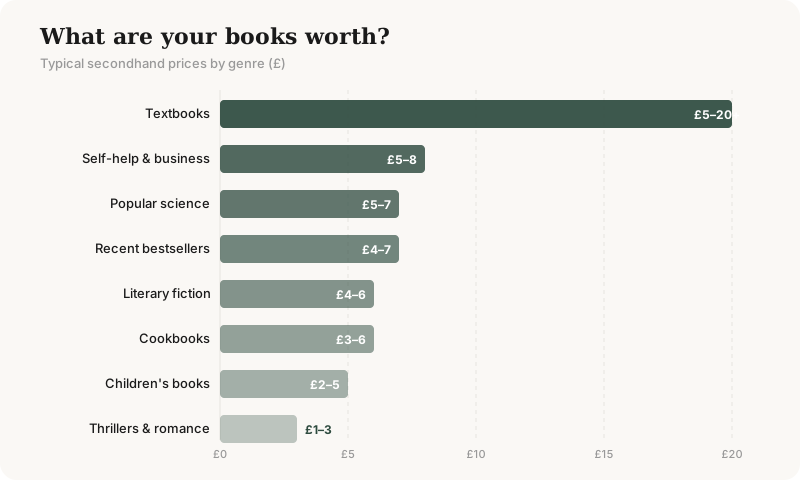
Self-help and business books: £5–8. Titles like Atomic Habits, The Psychology of Money, and Thinking, Fast and Slow hold their value well. People buy these to read once and act on, which means there's always demand for cheaper secondhand copies.
Popular science and economics: £5–7. Sapiens, Freakonomics, that sort of thing. Strong and steady — these rarely drop below £4.
Literary fiction: £4–6. Booker Prize winners, modern classics, and well-known authors do reliably well. First editions or hardbacks of literary fiction can go higher.
Recent bestsellers: £4–7. Anything published in the last two to three years that was widely talked about. The closer to publication date, the better the price.
Textbooks: £5–20+. University textbooks can be worth a lot, but only if the current edition is still in use. Last year's edition of a medical textbook might fetch £15. The edition before that is essentially worthless.
Children's books: £2–5. Popular series (David Walliams, Diary of a Wimpy Kid, Harry Potter) sell well. Random picture books are harder to shift unless they're well-known titles.
Mass-market thrillers and romance: £1–3. James Patterson, Danielle Steel, and similar. There are simply too many copies in circulation for prices to stay high. These are the books trade-in services reject or offer 10p for.
Cookbooks: £3–6. Big-name authors (Ottolenghi, Nigella, Hairy Bikers) hold value. Generic or dated cookbooks don't.
Does book condition really matter?
Less than you'd expect. A book with a creased spine, some dog-ears, and a coffee ring on the back cover still sells perfectly well if the title is popular. Most secondhand buyers expect some wear.
What does knock the price down: water damage, missing pages, heavy highlighting throughout, or a cover that's falling off. That's not "well-loved" — that's damaged.
A quick wipe of the covers and page edges with a damp cloth makes a bigger visual difference than you'd think. Five minutes of effort, and your books look noticeably better in photos.
The honest rule of thumb: if you'd be happy receiving the book as a gift, it's in sellable condition.
How does format affect the price?
Trade paperbacks (the larger ones, roughly A5 size) hit the sweet spot. They're the most common format for popular non-fiction and literary fiction, easy to post, and buyers prefer them.
Hardbacks get a small premium — typically £1-2 more than the paperback. But they're heavier to ship, so the extra postage can eat into that difference.
Mass-market paperbacks (the small, cheap ones) are the hardest to sell for a decent price. They're physically smaller, feel less valuable, and the market is flooded with them.
When are books worth the most?
Timing matters more than people realise.
Textbooks spike in August and September. Students buying for the new term will pay full price for books they need. If you've got textbooks to sell, waiting until late summer can double the return.
TV and film adaptations create spikes. When a book gets a Netflix series or a film adaptation announced, secondhand prices jump. If you spot an adaptation being announced, list the book immediately — the window is usually a few weeks.
New year, new me. Self-help and business books see a bump in January. People are making resolutions and looking for cheap copies.
BookTok waves. When a book goes viral on TikTok, prices can spike overnight. This is harder to predict, but if you notice a title trending, it's worth checking what your copy could sell for.
How do I find out what a specific book is worth?
A few ways to check, from quickest to most thorough:
Use an app with live pricing. Sell Your Shelf checks current secondhand market prices automatically when you scan your books. Full disclosure — I built it — but the pricing data comes from live market sources, not guesswork.
Check Amazon used listings. Search for your book, then look at the "Used" prices. Ignore the lowest (often damaged copies) and the highest (optimistic sellers). The middle range is roughly what the market will bear.
Look at eBay sold listings. This is the most accurate method for individual books. Search the title, then filter by "Sold" items. This shows what people actually paid, not what sellers are hoping for.
Ignore what charity shops charge. Charity shop prices are set arbitrarily and don't reflect the online secondhand market at all.
Which books aren't worth selling?
Being honest: some books aren't worth the effort of listing and posting, regardless of the platform.
Outdated textbooks. If a newer edition exists, the old one is effectively worthless. Nobody's buying a 2019 edition of a textbook that's now on its 2025 version.
Heavily damaged copies. Water damage, mould, missing pages, or a detached cover. These are recycling, not reselling.
Very common mass-market paperbacks. If a book sells for under £2 secondhand, the time and postage involved in selling it usually aren't worth it. Donate these or pass them to a friend.
Outdated non-fiction. A social media marketing guide from 2018 or a travel guide from 2015 has no resale value. The information is too stale.
Frequently asked questions
Are first editions worth more?
Sometimes, but not as often as people hope. A first edition of a modern bestseller isn't particularly rare — publishers do large first print runs. First editions become valuable when the book later becomes a classic and early copies are scarce. For most books published after 2000, first edition status adds little to nothing.
How much are Harry Potter books worth?
It depends entirely on the edition. Early Bloomsbury first editions of Philosopher's Stone can be worth thousands. Standard paperback copies of any Harry Potter book sell for £3-5. The illustrated editions hold value better at £8-15.
Should I sell books individually or as bundles?
Individual listings get better per-book prices. Bundles sell faster and save on postage. A good middle ground: list your higher-value books individually (anything over £5) and bundle the cheaper ones by author or genre.
Do signed copies sell for more?
Yes, but only if the signature is authenticated or the author is well-known. An unverified signature from an unknown author adds nothing. A signed copy from a recognisable name can add £5-20 depending on the book.
Is there a quick way to check the value of a whole shelf?
The fastest method is an app that scans multiple books at once and checks pricing automatically. Scanning individual barcodes or searching titles one by one works but takes significantly longer if you've got more than a few books to check.
Ready to clear your shelf?
Scan your books in 90 seconds. Free to list, and you keep £2–4 per sale.